About AllergyPass

Every journey has a story.

AllergyPass began with an allergic reaction at a Bangkok street stall, a simple idea, and a belief that better communication can make exploring the world a little easier.

Read the story
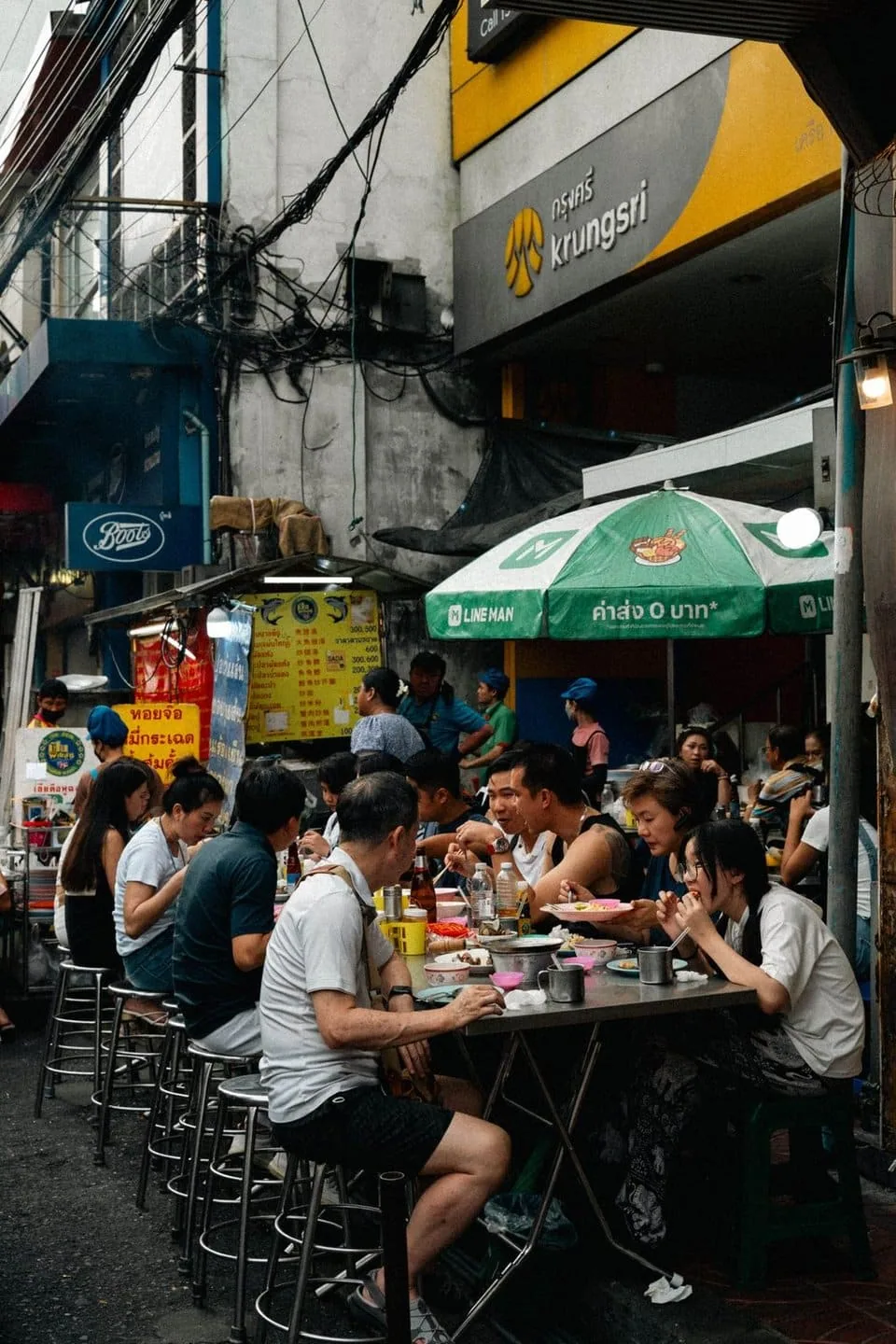
Diners on plastic stools at a busy street-food restaurant on a Bangkok sidewalk
Bangkok, Thailand
The Bangkok moment

It started at a street food stall in Bangkok.

Shortly after I moved to Bangkok, a friend of mine had an allergic reaction at a street food stall. She was careful. She tried to explain her allergy. The vendor was attentive and genuinely wanted to help.

It still went wrong, not because anyone was careless, but because neither side could understand the other clearly enough to get it right.

I kept thinking about how a single card, something she could hand over, written in the local language, with exactly what to avoid, would have changed the outcome. So I built one.

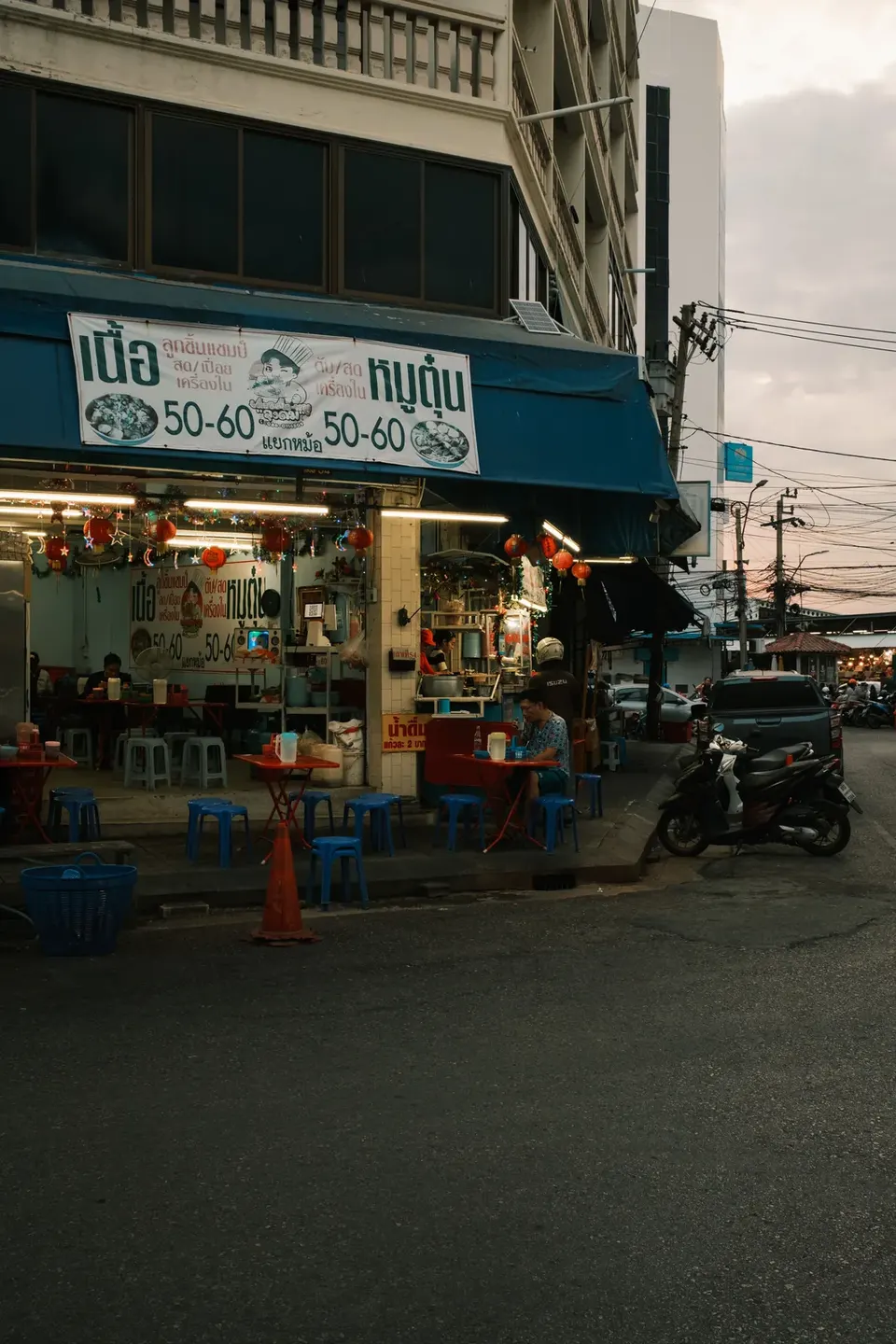
A Thai street-food shop at dusk, with blue stools on the pavement and a menu sign in Thai
From an idea to AllergyPass

One small card. A clearer conversation.

That first card became the Allergy Card Builder: pick your allergens, pick a destination, and get a bilingual card in the local language with English underneath, ready to show kitchen staff. The guides, tools and resources that grew around it became AllergyPass.

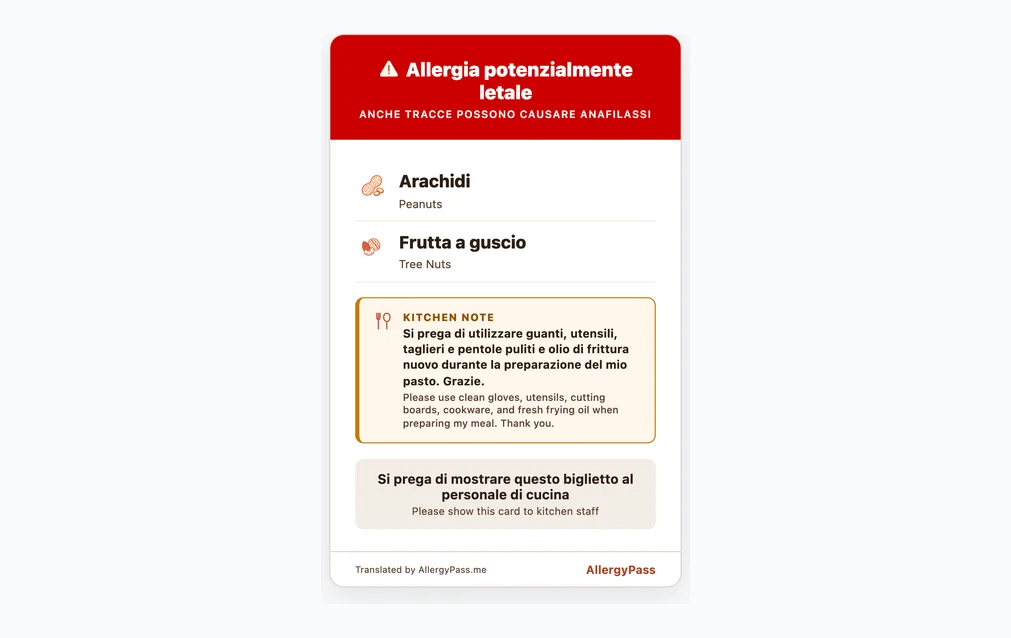
  • Card imageAn Italian card image, sent by email, to show on your phone at the table.
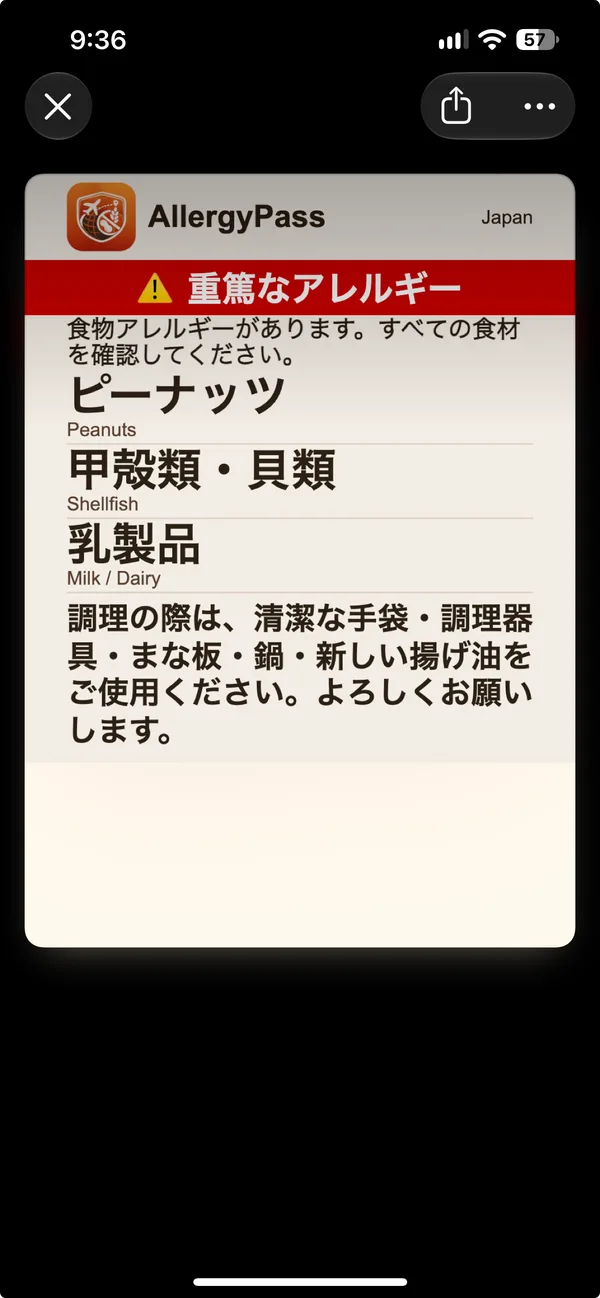
  • Wallet passA real Japanese pass in Apple Wallet, next to your boarding pass.
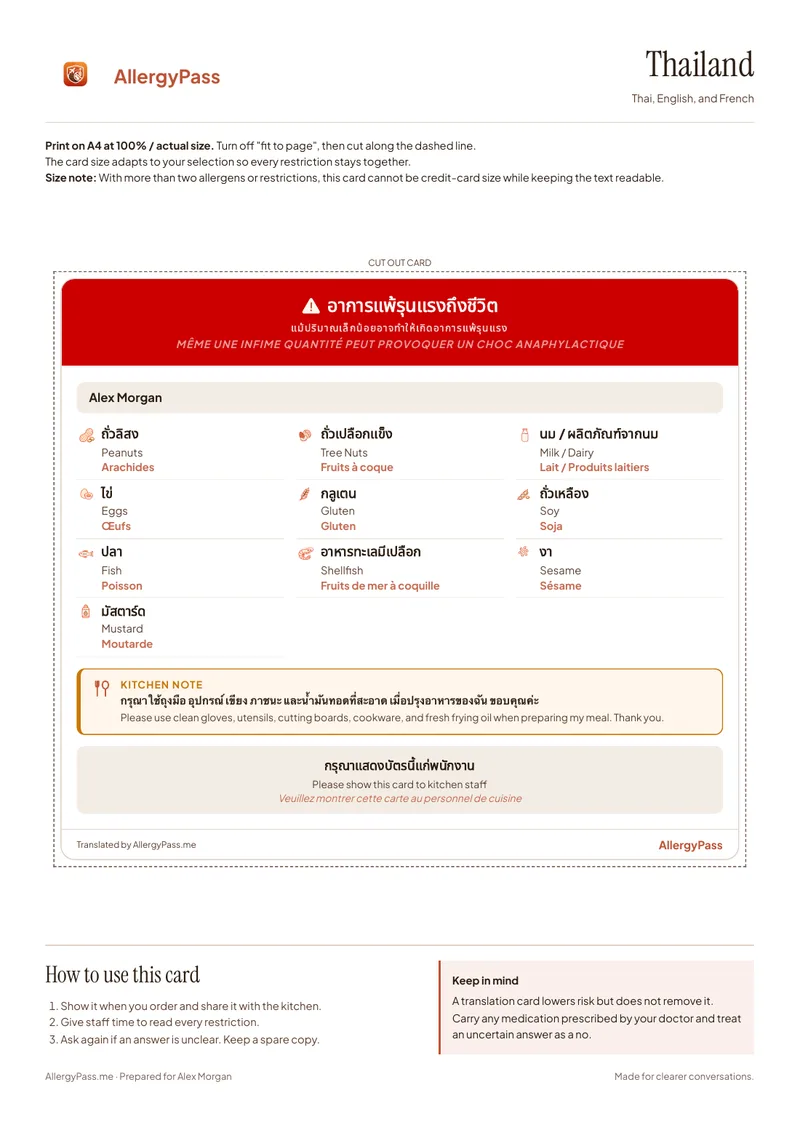
  • Printable PDFPrint at actual size, cut along the line, keep it with your passport.

The free card covers English-language destinations as an image. The Wallet pass and printable PDF come with a paid card.

Abe Alatieh, dentist and founder of AllergyPass, in Bangkok
Meet the founder

Hi, I'm Abe.

I'm Abe Alatieh, the founder of AllergyPass and a dentist by training. Healthcare taught me to pay attention to the details that matter, especially where communication and safety meet.

I've spent most of my adult life living outside my home country, and I live in Bangkok now. That showed me how much language shapes an experience. AllergyPass brings together that healthcare perspective, a love of travel, and a simple idea: make important food-allergy information easier to communicate.

Dentistry isn't allergy medicine, so I don't lean on my own authority for the medical specifics. Regulatory allergen facts are checked against cited primary sources, and translations go to native speakers for review.

  • Dentist
  • Lives in Bangkok
  • Native Arabic · fluent English & Swedish
Luffa, a small pixel-art otter with an orange scarf and backpack, waving
Meet our little explorer

Small paws. Big adventures.

Meet Luffa, the curious little traveler with a big appetite for adventure and a remarkable talent for finding herself in tiny disasters.

She's just getting started. Come along for the journey.

Follow Luffa on TikTok (opens TikTok)
What we believe

Thoughtfully made for real-world travel.

  • Clear communication

    Practical allergy information designed to be easier to understand across language barriers.

  • Responsible translation

    A careful approach to language, clarity, and communicating important dietary information. Cards use fixed, stored wording, never live machine translation.

  • Transparency

    AllergyPass supports communication and preparation but cannot guarantee food safety or replace professional medical advice.

Review policy

How guides on this site get reviewed.

Native-speaker review register

Completed July 2026 · card wording in use at the time; not the kitchen cross-contact note, dietary heading or food names added since

  • Arabic
  • French
  • German
  • Hindi
  • Punjabi
  • Russian
  • Spanish
  • Thai
  • Vietnamese

Who reviews. I review every guide myself — Abe Alatieh, dentist and founder. Arabic is my native language, and I'm fluent in English and Swedish. For other languages, I work with native speakers of the language being reviewed. Some reviewers have asked not to be publicly identified, and AllergyPass respects that choice. I'm not an allergist and don't present myself as one.

What a translation review checks. Reviewers provide natural, locally used phrasing in their chosen language rather than a literal word-for-word translation. That wording is used in the cards and guides, and guides use the same stored translations as the card builder to keep them consistent. Regulatory allergen facts (which allergens a country requires on labels, how a labeling law actually applies) are checked against primary sources, things like Japan's Consumer Affairs Agency allergen list or EU Regulation 1169/2011, not secondhand summaries. A review does not mean clinical sign-off on allergy management advice.

How translations are delivered. AllergyPass does not ask an AI tool or machine-translation service to translate your card when you build it. The card uses fixed wording stored in a versioned translation database. That same stored wording is reused across the builder, downloadable cards, and language guides, so a correction can be checked once and applied consistently.

Translation review status. In July 2026, native speakers completed reviews for Arabic, French, German, Hindi, Punjabi, Russian, Spanish, Thai, and Vietnamese. Reviewer names are withheld where requested. Native-speaker reviewers are still being sought for the remaining languages, so the completed status does not apply to every language currently available. Each review covered the card wording in use at the time. Two card strings, and the food names added to the catalog since then, were added separately and have not yet had native-speaker review in any language: the kitchen cross-contact note and the dietary-requirement heading. The card builder says so on every reviewed-language card. These are language reviews, not clinical allergy advice. A guide's "last reviewed" date records its most recent editorial check. If wording appears unclear or incorrect, please report the language and phrase so it can be checked and corrected wherever it is used.

Cadence. Guides are re-checked whenever a relevant regulation or translation changes, and every guide gets re-checked at least once a year regardless. The "last reviewed" date on each guide reflects the most recent check, not the original publish date.

A note on medical advice. AllergyPass is a communication and information tool. It is not a substitute for medical advice, allergy testing, or guidance from your doctor or allergist. Always carry any prescribed emergency medication (such as an epinephrine auto-injector) when traveling with a severe food allergy, and consult a healthcare professional about your individual needs before travel.

Our mission

The world is too good to miss.

Wherever you're headed next, we're here to help you communicate with more confidence, so you can focus on what really matters: exploring, tasting, and enjoying the journey.

Make Your Allergy Card