Allergy Card Builder: Translated Allergy Cards in 40 Languages
Your card in minutes, no account needed
- 1 Select allergens
- 2 Pick destination
- 3 Download
- 4 Show at restaurants
Each pass covers 1 destination language. Need a different pair? Create a new pass.
Get your travel-ready card package
Enter your email and we'll send a high-quality image, plus Apple & Google Wallet passes, ready to show offline, no internet needed at the restaurant.
✓ Sent! Check for your card.
You'll get your card by email right after checkout.
✓ Your image and wallet links were sent to your email after purchase.
+ Add personal details (optional)
Your name and emergency contact, printed on the card
Frequently asked questions
Why allergy cards matter abroad
Language barriers make food allergies genuinely dangerous. A card removes the ambiguity.
Translation apps lose the urgency
"I'm allergic to peanuts" in Google Translate reads like a preference. A card with medical framing (in the kitchen's language) doesn't.
Hidden ingredients are everywhere
In Southeast Asia, fish sauce, shrimp paste, and peanut oil show up in dishes that don't mention them. Even experienced cooks don't always flag it.
Emergencies are stressful enough
If something goes wrong, a card in the local language helps first responders act faster. Worth having and never needing.
Communicating allergies abroad
A bilingual card is your most reliable tool. But it works best alongside a few habits.
Before you travel
Learn the cuisine. Southeast Asian cooking uses fish sauce and shrimp paste as base flavours, they're in dishes that don't mention them on the menu. Know what you're walking into before you land.
At the restaurant
Show the card and say it out loud. Not everyone reads well, and not everyone takes a card as seriously as a spoken request. When in doubt, order something simple you can verify visually.
What trips people up
Relying on a translation app alone. Assuming things are labelled. Skipping the verbal conversation. Leaving their medication in the hotel room.
Hidden allergens by cuisine
 Thai food
Fish sauce, shrimp paste, peanuts in nearly every sauce. Pad thai base contains both fish sauce and shrimp paste.
 Japanese food
Soy sauce in virtually everything. Dashi (fish stock) as base for miso soup, noodle broths, and sauces.
 Vietnamese food
Fish sauce (nước mắm) as universal condiment. Peanuts in satay garnishes, phở toppings, and noodle dishes.
 Indonesian food
Peanut sauce in satay and gado-gado. Shrimp paste (terasi) as the base of most sambals.
Other AllergyPass resources
Everything you need to eat safely abroad.
Allergy Risk Checker
Search by dish and allergen. See what's hiding in pad thai, pho, or sushi before you order.
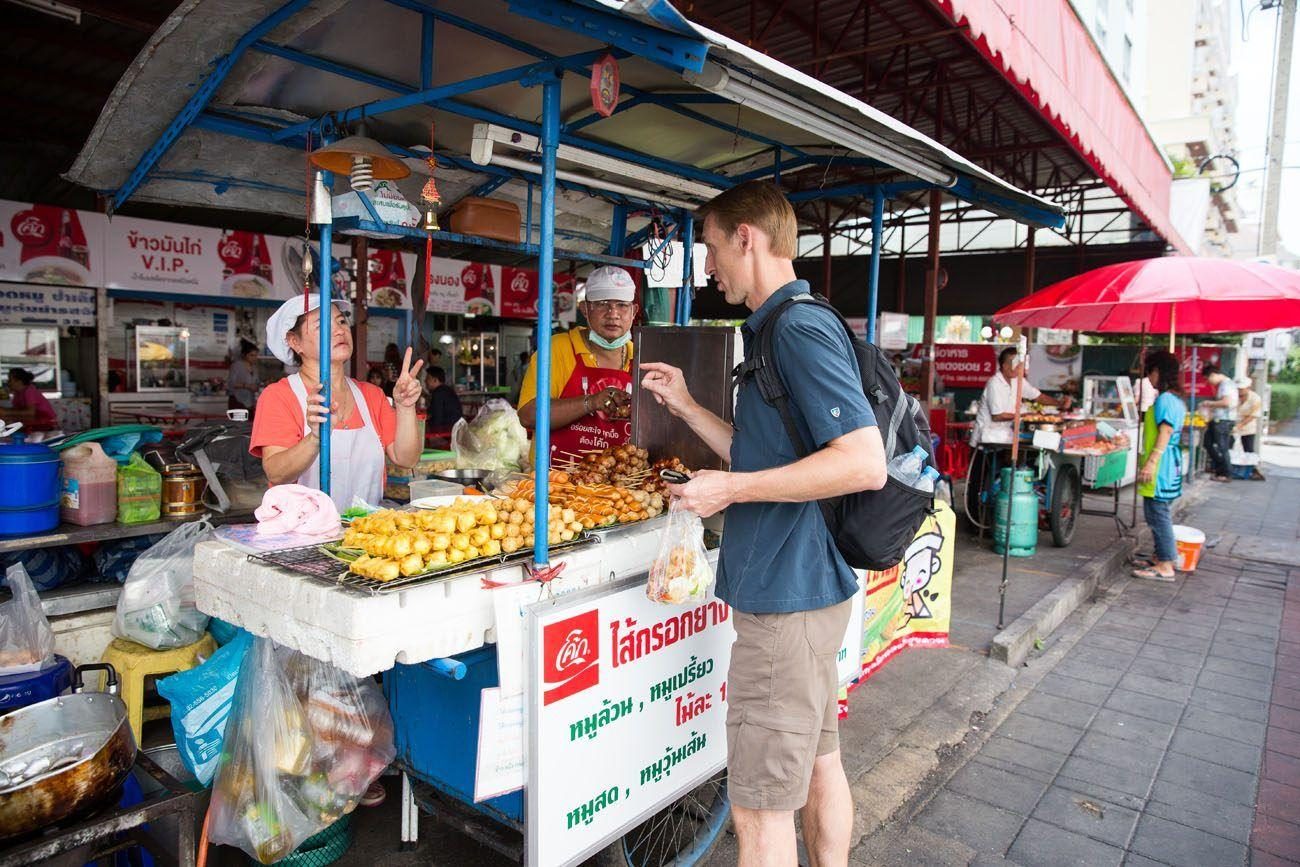
Hidden Allergens in Thai Food
Fish sauce, shrimp paste, peanut oil, dried shrimp. What they're in, where they hide, and how to avoid them.

Emergency Healthcare in Thailand
Emergency numbers, best hospitals by city, what to expect from the Thai system, and travel insurance advice.
Your card is free to build
No account. No commitment. Takes 2 minutes, and you can always save it later.