Best Food Tours in Bangkok
for Food Allergy Travelers
Bangkok has some of the best food in the world. Having a food allergy does not mean sitting that experience out. It means choosing the right format, asking the right questions, and knowing which operators can actually accommodate you.
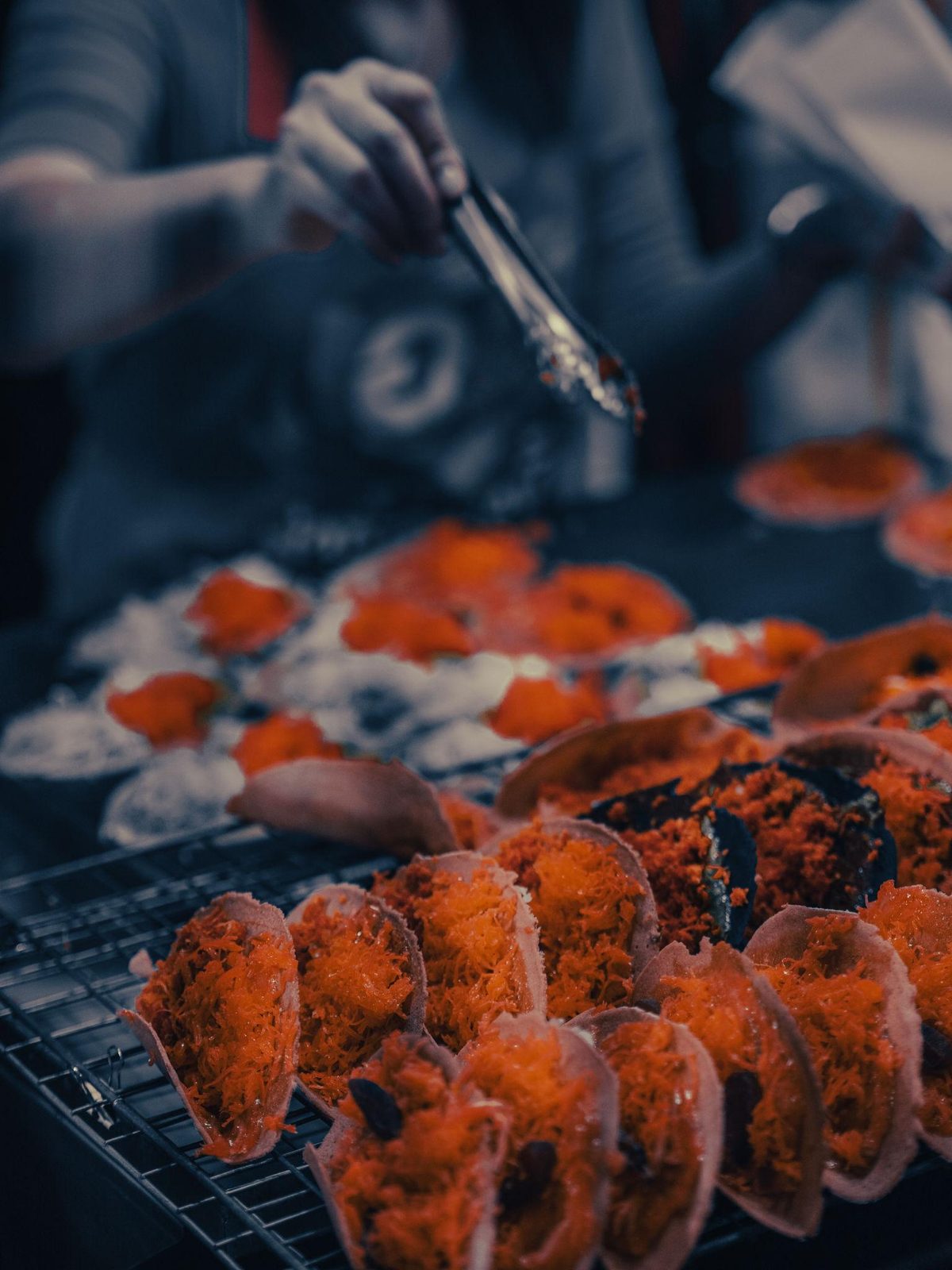
The core challenge with Bangkok food tours and allergies
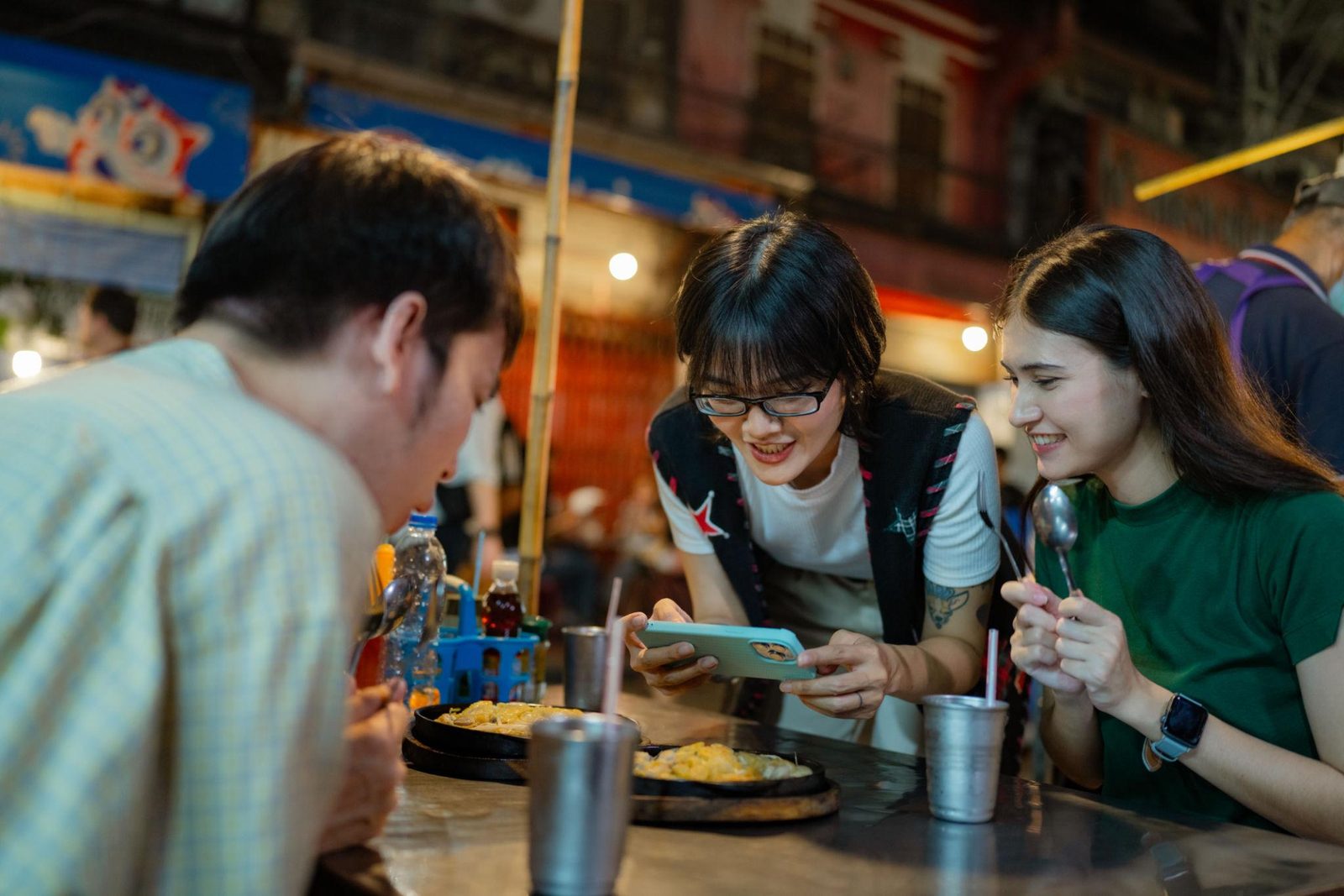
Thai cuisine's three most prevalent structural allergens are fish sauce, shrimp paste, and peanuts. They are not optional ingredients in most dishes, they are foundational. Fish sauce is in virtually every savory Thai dish the way salt is in Western cooking. Shrimp paste (kapi) is the flavor base for most Thai curries and dipping sauces. Peanuts appear as a garnish or base in dishes from pad thai to satay to green papaya salad.
A generic Bangkok street food tour visits 8 to 12 vendors across 3 to 4 hours. At each stop, the guide communicates in Thai with the vendor about what you are eating. What they typically do not do: communicate your specific allergy, verify cooking surfaces are separate, or skip stops that cannot safely accommodate you. That is not a failure of intent, it is a format that was not designed for allergy management.
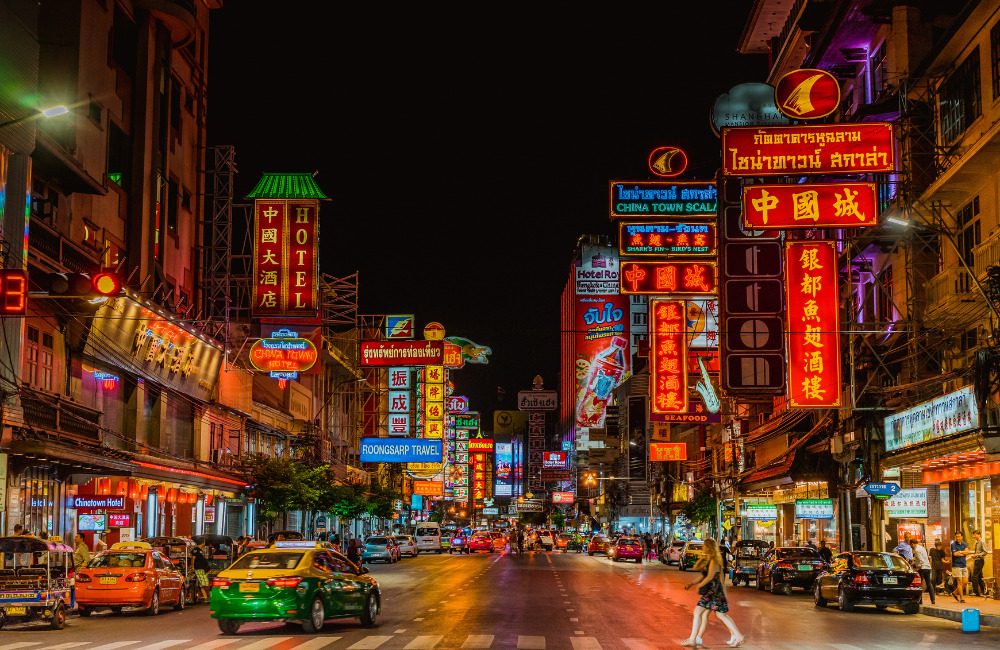
Bangkok cooking classes: the best option for allergy travelers
A Thai cooking class is the single safest food experience format in Bangkok for people with allergies. You control what goes into your food because you are the one making it.
Most Bangkok cooking classes can accommodate common allergens with advance notice. The standard format starts with a market visit to source ingredients, then moves to a teaching kitchen where you cook 4 to 6 Thai dishes. Instructors at reputable schools are accustomed to modifying recipes for vegetarians, vegans, and common allergies, fish sauce substitution with soy sauce, peanut omission from pad thai, shellfish-free curry paste.
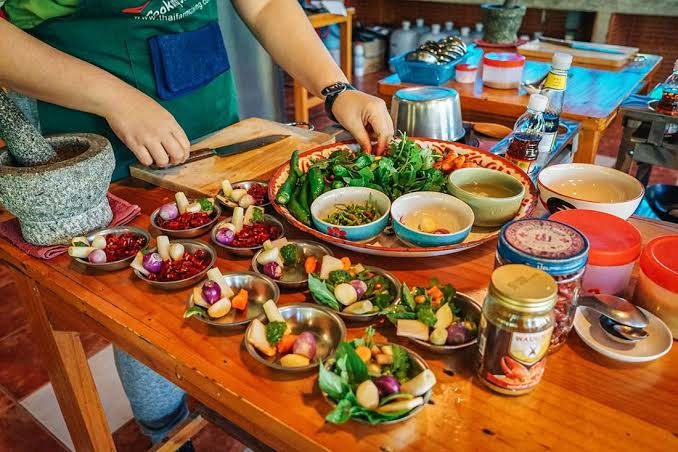
When searching for Bangkok cooking classes, look for operators that: list allergy accommodation explicitly in their description, offer private class options, and allow pre-booking communication with the instructor. Classes at established culinary schools (rather than casual guesthouse operations) tend to have more structured allergy protocols.
Browse Bangkok cooking classes and food experiences with advance booking and operator messaging.
Try "Hands-On Thai Cooking Class"Restaurant-based food tours: how to screen operators
If a street food tour is what you want, the compromise is finding an operator who builds their tour around sit-down restaurants rather than street stalls, and who offers pre-tour communication. Some Bangkok food tour operators specifically cater to dietary restrictions and will customize the stop list around your needs.
The screening questions to ask before booking any food tour:
- Can I communicate my specific food allergy to the guide before the tour date?
- Will the guide pre-brief each restaurant about my allergen before we arrive?
- Can you modify the tour stop list to skip vendors who cannot safely accommodate me?
- What is the group size? (Under 6 is significantly better for allergy management)
- Are the restaurants on the tour sit-down establishments or street stalls?
An operator who responds with specific, confident answers to these questions is far more likely to be able to accommodate you safely than one who gives a generic "yes we can accommodate all dietary needs." The specifics of the response are the signal.
Search Bangkok food tours, filter by group size and read operator reviews mentioning dietary accommodations.
Try "Bangkok Food Bus Tour"What to bring on any food experience
Regardless of the tour format you choose, two things belong with you on any Bangkok food experience.
Your Thai-language allergy card. Your guide will communicate with vendors in Thai. Having a written card that lists your allergens in Thai (including derivative ingredients) gives your guide a clear, accurate reference to show vendors. It removes the translation ambiguity between what you said in English and what the guide conveys in Thai. Print one from AllergyPass before your tour.
Your epinephrine, if prescribed. In your bag. Not back at the hotel. A Bangkok food experience is an active eating situation, the precise context where you need it immediately accessible.
Frequently asked questions
Can you do a food tour in Bangkok with a food allergy?
Yes, with the right format and operator. Cooking classes are the lowest-risk option. Private small-group restaurant tours with pre-briefed guides are workable. Large group street food tours are the highest risk because of cross-contamination at vendor stalls and limited time for allergen communication at each stop. Always contact the operator before booking with your specific allergen details.
What allergy risks are on Bangkok food tours?
Fish sauce, shrimp paste, and peanuts are present across virtually all savory Thai cooking. Street food stalls use shared cooking surfaces and utensils with high cross-contamination probability. Communication with individual vendors is limited on large group tours. Sit-down restaurant tours are lower risk because kitchen preparation is more controlled and advance communication with the restaurant is possible.
Are Bangkok cooking classes safer for allergy travelers?
Generally yes. You have full ingredient visibility, direct communication with the instructor about substitutions, and the ability to set the menu in advance. Most established Bangkok cooking schools can accommodate peanut, shellfish, and fish allergies with advance notice by substituting ingredients in the recipes. Contact the class operator before booking to confirm they can work with your specific allergen.