 AllergyPass
Hidden Allergens
in Egyptian Food
Egyptian cooking brings fava beans, sesame, wheat, and dairy into familiar dishes in ways that are easy to miss on a menu. Here is where they appear and what to ask before ordering.
 Egypt
Egypt
Build a bilingual card before your Egypt trip: Arabic plus English, listing your specific allergens.
Build My Egypt CardIn this guide
Why these questions matter
In Egypt, allergens are often part of the dish rather than an optional topping. Eish baladi, the round wheat flatbread, may arrive before you order and be used to scoop dips and stews. Ful medames and ta'ameya put fava beans at the centre of everyday meals, while tahini appears with beans, grilled foods, and sweets.
A menu name is not always enough to answer an allergy question. Ask about the recipe, toppings, sauces, frying oil, and shared utensils before you decide whether a dish works for you. If the answer is uncertain, choose a different dish or meal.
Fava beans: ta'ameya and ful medames
Ta'ameya, Egypt's falafel, is traditionally made from fava beans rather than the chickpeas used in much Levantine falafel. Ful medames is slow-cooked fava beans dressed with oil, lemon, garlic, and cumin, often served with bread and toppings such as tahini or egg. Fava-bean allergy and G6PD deficiency are separate medical issues. If a clinician has told you that you have G6PD deficiency or should avoid fava beans, follow that advice; WHO guidance describes fava beans as a possible trigger for haemolysis in people with G6PD deficiency. This page is not a way to diagnose either condition.
Ask: “Is this made with fava beans, and is the same spoon or pan used for other dishes?” If you need to avoid fava beans for allergy or another medical reason, do not rely on the word “falafel” alone.
Sesame: tahini and halawa
Tahini is served with ful medames, thinned with lemon and garlic into a sauce for grilled meat and vegetables, and used as the base of halawa, a dense sesame sweet. Sesame seeds can also top breads and pastries. Ask whether sesame is in the dish, sauce, topping, or shared preparation; taking tahini off the plate does not answer the cross-contact question.
Wheat: bread and koshari
Eish baladi, a round pita-style flatbread, may be served automatically and used as an eating utensil. Koshari layers rice, lentils, chickpeas, and macaroni under tomato sauce and fried onions; the macaroni is normally wheat-based and may already be mixed through the serving. Fiteer, a flaky layered pastry, is also wheat-based. For coeliac disease or wheat allergy, ask about the ingredients and shared preparation rather than assuming that leaving bread off makes the meal suitable.
Dairy: cheese and ghee
Dairy often appears as a supporting ingredient. Domiati, a salty white cheese, and roumy, a harder aged cheese, are common at breakfast and in fiteer fillings. Ghee, or clarified butter, may be used in molokhia and pastries. Laban and rice pudding (roz bel laban) are also common. Ask whether “butter,” “ghee,” cheese, milk, or yoghurt is used, and whether a sauce or pastry filling is made in-house.
Fish and shellfish: coastal dishes
Seafood is especially prominent in Alexandria and Red Sea resort towns such as Hurghada and Sharm El Sheikh. Sayadiya is a spiced fish dish served with rice. Feseekh is fermented salted fish traditionally eaten during Sham El Nessim; it raises food-safety questions separate from fish allergy. If you avoid fish or shellfish, ask about the species, stock, sauces, grill, fryer, and serving utensils.
Cross-contamination in Egyptian kitchens
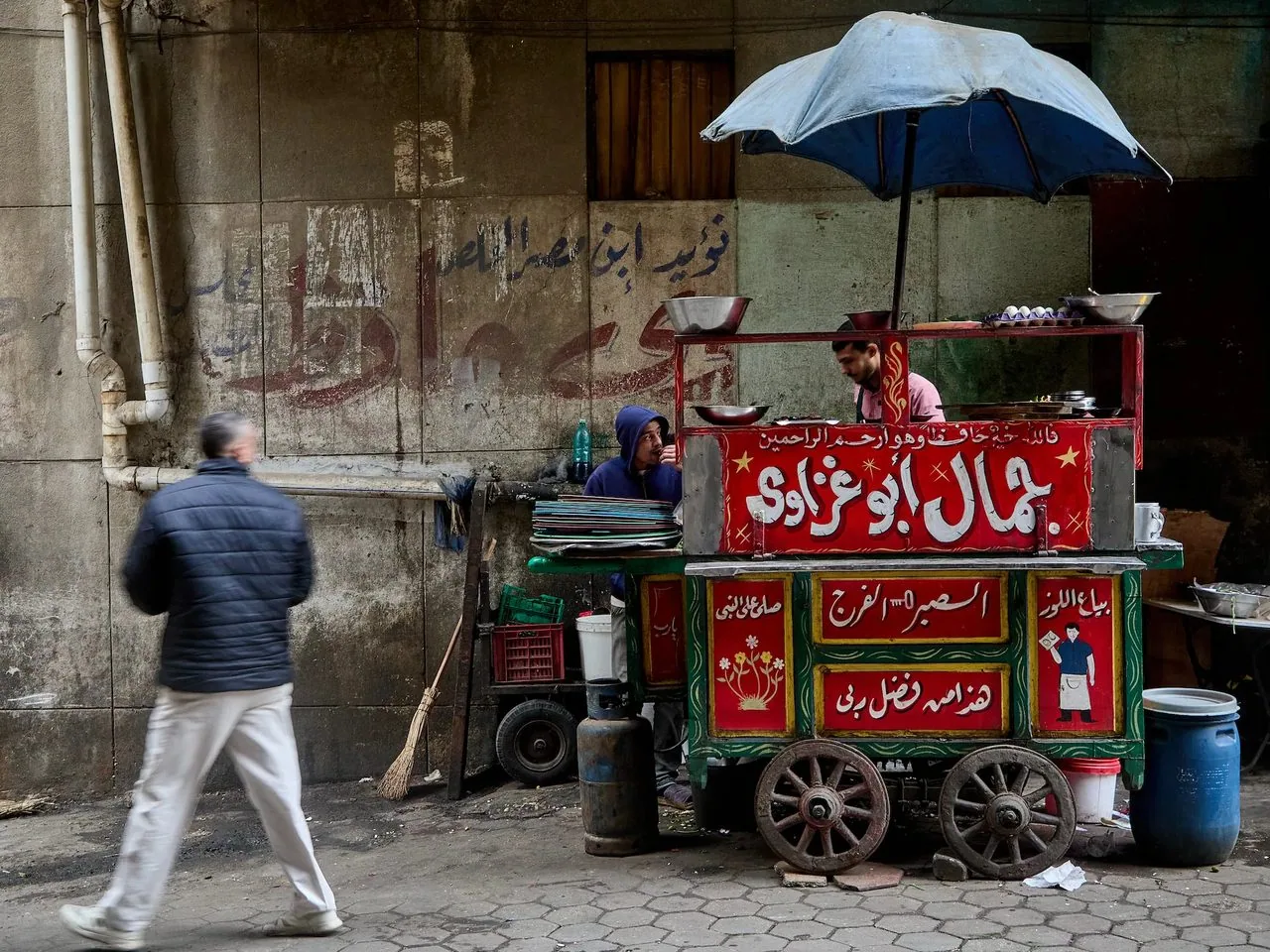
Street stalls and casual restaurants may use shared fryers, pans, pots, and serving utensils. Koshari is often assembled from batches that are prepared ahead of service. Ask whether your dish shares oil or equipment with ta'ameya, tahini, dairy, wheat, or another ingredient you avoid. If staff cannot answer clearly, do not treat an omitted ingredient on the menu as proof that the dish is suitable.
Where each allergen appears
Sources and food-safety notes
- World Health Organization: Glucose-6-phosphate dehydrogenase deficiency: WHO Working Group report — Describes fava beans as a possible trigger for haemolysis in people with G6PD deficiency. Fava-bean allergy and G6PD deficiency are separate issues, and neither is diagnosable from a travel guide.
- FAO/WHO Codex Alimentarius: General Standard for the Labelling of Prepackaged Foods (CXS 1-1985) — Section 4.2.1.4 lists the foods known to cause hypersensitivity that must always be declared: gluten-containing cereals, crustacea, eggs, fish, peanuts and soybeans, milk, tree nuts, and sulphite at 10 mg/kg or more. It governs prepackaged food, not a dish cooked to order at a stall.
Frequently asked questions
Where does sesame appear in Egyptian food?
Tahini is served with ful medames, thinned with lemon and garlic for sauces, and used as the base of halawa. Sesame seeds can also appear on breads and pastries. Ask whether tahini or sesame is in the dish, sauce, topping, or shared preparation, rather than treating it as a garnish that can simply be removed.
Does koshari contain wheat?
Usually. Koshari layers rice, lentils, chickpeas, and macaroni under tomato sauce and fried onions; the macaroni is normally wheat-based. Ask whether the pasta can be left out and whether the remaining ingredients share pots, spoons, or serving surfaces with wheat. For coeliac disease, ask specifically about gluten and cross-contact rather than assuming a pasta-free bowl is gluten-free.
What should I know about fava beans in ta'ameya?
Egyptian ta'ameya is traditionally made from fava beans, not chickpeas. Fava-bean allergy and G6PD deficiency are different medical issues, but both are reasons to confirm the bean before ordering. People with known G6PD deficiency should follow their clinician's advice about fava beans; the World Health Organization describes fava beans as a possible trigger for haemolysis in G6PD deficiency.