 AllergyPass
Indonesian Allergy Card
printable translation card in Bahasa Indonesia
Every allergen AllergyPass tracks, in Bahasa Indonesia, plus the five exact sentences printed on an Indonesia-bound card and what actually needs asking about in satay sauce, sambal, and coconut-based curries. Built for Indonesia and Bali specifically — Indonesian is a distinct language from Malay, not a variant of it.

A live sample. Your finished card is personalized in the builder.
Get this card in Indonesian
Your allergens, written in Bahasa Indonesia for kitchens in Indonesia, with the optional cross-contamination warning shown in this sample.
- Printable PDF with a cut-out card, plus an image for your phone
- Every allergen in Indonesian and English, side by side
- Apple and Google Wallet passes for cards with up to three allergens
$7.99 one-time for Indonesian English is free · All Languages $29.99 · instant digital delivery, no shipping charge
Continue with this card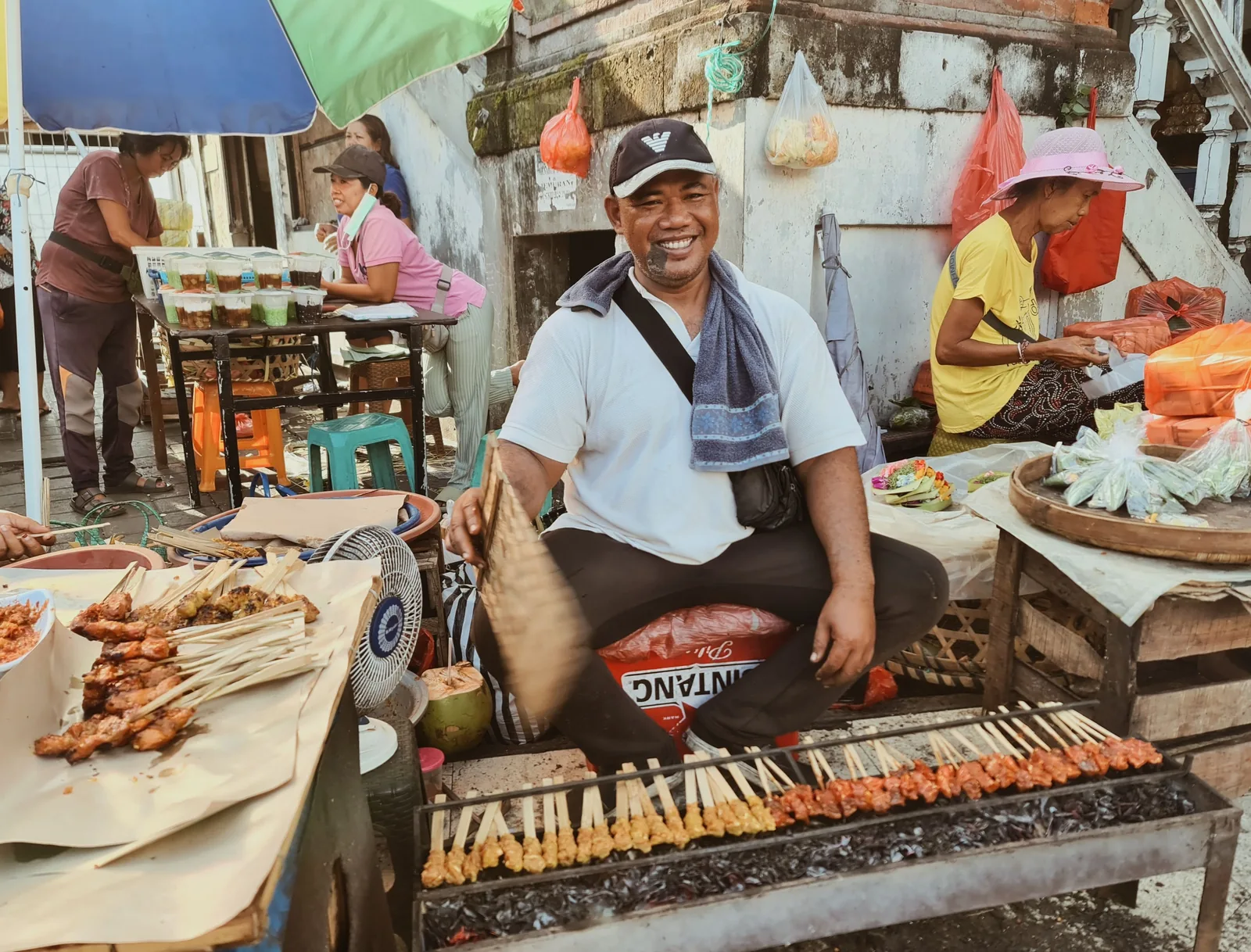
Hidden allergens in Indonesian and Balinese cooking
Peanuts show up constantly in Indonesian and Balinese food, most visibly in satay's dipping sauce and in gado-gado, a vegetable dish built on a peanut dressing rather than finished with one. In both dishes, peanut sauce (bumbu kacang) is the point, not a garnish, so asking for it to be left off doesn't solve the shared-prep and shared-utensil risk underneath. A less visible risk is terasi, fermented shrimp paste, which is stirred into the bumbu (spice base) at the start of cooking for many curries, stir-fries, and sambals; by the time the dish reaches the table it has cooked into the sauce and disappeared, making it a hidden shellfish allergen for anyone who assumes a dish is plant-based because it looks that way.
Coconut milk (santan) is easier to spot: it's the base of many Balinese curries and braises and usually appears on menus by name. Candlenut (kemiri), by contrast, is ground into spice pastes as a thickener for dishes like rendang and sayur lodeh, leaves no visible nut in the finished dish, and is often not recognized by kitchen staff as a tree nut at all. For a deeper look at how these ingredients move through Balinese kitchens, see our peanut allergy in Bali guide and the wider Indonesia food allergy hub.
Does Indonesian food have peanuts? What about tree nuts?
Use the live card above: choose your restrictions, then show the finished card before ordering and ask staff to confirm the ingredients and preparation.
Use the live card above: choose your restrictions, then show the finished card before ordering and ask staff to confirm the ingredients and preparation.
What to ask before you order in Indonesia
Recipes vary by warung, region, and stall. Ask about the specific dish rather than assuming a category is safe or unsafe.
Frequently asked questions
How many allergens can I flag on an Indonesian allergy card?
71 of AllergyPass's 71 tracked allergens and dietary restrictions currently have an Indonesian translation; any not yet translated fall back to English on the card until they are.
Is Indonesian the same as Malay?
No. Indonesian (Bahasa Indonesia) and Malay (Bahasa Melayu) are closely related languages with shared vocabulary, but they are not interchangeable — spelling, common words, and everyday usage differ enough that a Malay card is not a substitute for an Indonesian one. This page and the AllergyPass card builder's ID destination use Bahasa Indonesia specifically, for Indonesia.
What about tree nuts like candlenut (kemiri) in Indonesian food?
Candlenut (kemiri) is ground into spice pastes used in curries, sambals, and braised dishes across Indonesia and Bali, and because it is blended in, there's rarely a whole nut to spot on the plate. The AllergyPass card's general term for tree nuts is Kacang pohon; travelers with a tree-nut allergy should flag that category on their card and separately ask kitchens whether kemiri is in the dish, since staff don't always think of it as a nut.