 AllergyPass
Charles de Gaulle Airport
with Food Allergies
You land, you need food or medication, and the city is still a journey away. Here is what to check in the terminal, how to get urgent help, and how to choose your onward route without relying on stale airport details.
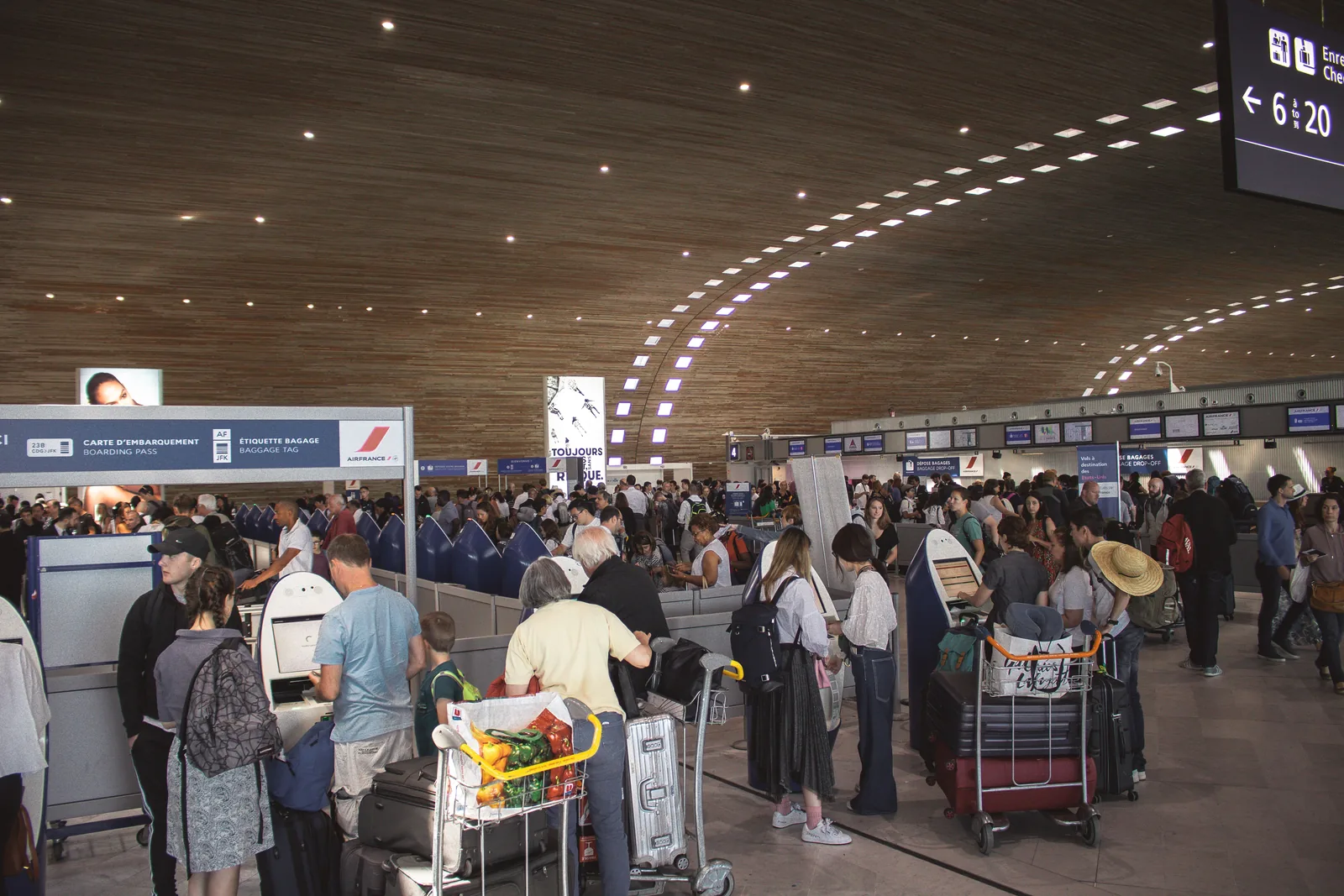 CDG, Paris
Eating at CDG before you get into Paris
CDG has chain cafés, fast-food counters, brasserie-style restaurants, and packaged-food shops. The selection and opening hours vary by terminal and departure area, so check the airport's current directory after confirming your terminal. Do not assume that a familiar chain uses the same recipe or preparation process in every location.
The same questions that matter in Paris matter at the airport. Butter and cream can sit in sauces, almond paste can be used in pastries, and wheat appears in breads, pastry, and many prepared foods. Ask whether an item contains your allergen, whether it is made on shared trays or equipment, and whether staff can check the packaged label. The Allergy Risk Checker can help you prepare questions, but it cannot verify a terminal's current recipe.
Packaged products may give you a clearer label than a busy counter, but check the individual package and the language you can read. EU food-allergen labeling does not make an unlabeled prepared meal suitable, and it does not remove cross-contact questions. If you are tired or rushed after a long flight, use food you brought or a product whose label you can actually check rather than guessing at a counter.
Pharmacy access at CDG
Paris Aéroport lists pharmacy services at CDG, but terminal locations and opening hours can change. Check the airport's current pharmacy listing for your terminal and travel date rather than relying on a static floor number. A pharmacy may help with ordinary travel needs; it is not a substitute for emergency care.
Do not plan to replace your prescribed auto-injector at CDG. Bring the medication prescribed for you, keep it accessible during the journey, and ask your clinician or pharmacist how it should be stored and carried. Availability, product formats, and prescription requirements can change.
If you need urgent medical help at CDG
Paris Aéroport says its CDG medical centre handles airport emergencies. Check the current airport health-centre information for the latest location and access details. For a serious reaction, do not spend time searching for a pharmacy or driving to a named hospital: follow your emergency plan and call 15 for SAMU or 112 from a mobile phone. France's official emergency-number guidance explains these services.
Tell airport staff or the dispatcher that this is a severe allergic reaction or anaphylaxis. Give your terminal, gate or nearby landmark, and a phone number. If you are travelling with someone, ask them to stay with your medication and travel documents while you receive care.
Getting from CDG into Paris
The RER B connects the CDG airport stations with Paris, while a taxi or pre-booked transfer gives you door-to-door travel. Compare the current service, your arrival time, luggage, accessibility needs, and the address of your accommodation. The Paris Region–Airports ticket covers the RER B airport journey; check the current fare and service status before setting out.
A taxi or transfer may make more sense late at night, with heavy luggage, or when your accommodation is awkward to reach by rail. Traffic can change the journey substantially, so do not plan an emergency connection around a fixed travel time. If you are unwell, ask airport staff or emergency services about the appropriate transport instead of continuing into Paris.
Renting a car to explore beyond Paris? Compare self-drive rentals with pickup right at the CDG terminal.
Compare car hire at CDGStoring your luggage if you have a long layover
If you land with hours to spare before your onward flight, or you want to eat somewhere vetted in Paris without hauling bags through a food court, dropping your luggage at a storage point near the airport is the simplest way to buy yourself that time.

Build your card before you leave the terminal
Everything above is preparation. A card written in French can give a restaurant or medical team a written starting point for butter, flour, almond, and your other specific allergens. Build it before departure, while you have time to check the wording and your prescribed medication list.
Frequently asked questions
What should I do if I have a severe reaction at CDG?
Follow your prescribed emergency plan. If you have a prescribed epinephrine auto-injector and your plan calls for it, use it for a severe reaction, then call 15 for SAMU or 112 from a mobile phone. Tell airport staff or the dispatcher that this is a severe allergic reaction or anaphylaxis and give your terminal and exact location.
Can I rely on buying allergy medication at CDG?
No. Paris Aéroport lists pharmacy and health-centre services at CDG, but locations and hours can change, and a pharmacy may not have the prescribed product you need. Bring your own prescribed medication, keep it accessible, and use the airport medical service or emergency number for a serious reaction.
What should I compare for getting from CDG into Paris?
The RER B connects the CDG airport stations with Paris, while a taxi or pre-booked transfer provides door-to-door travel. Compare current service, traffic, luggage, accessibility, arrival time, and your accommodation address. Île-de-France Mobilités lists a dedicated Paris Region–Airports ticket for the RER B; check the current fare before travel.