Thailand Food Allergy
Travel Safety Hub
Thailand has some of the best food in the world and three structural allergens that run through all of it. This hub is the starting point for every guide you need, organized by what you will be doing and when you will need it.
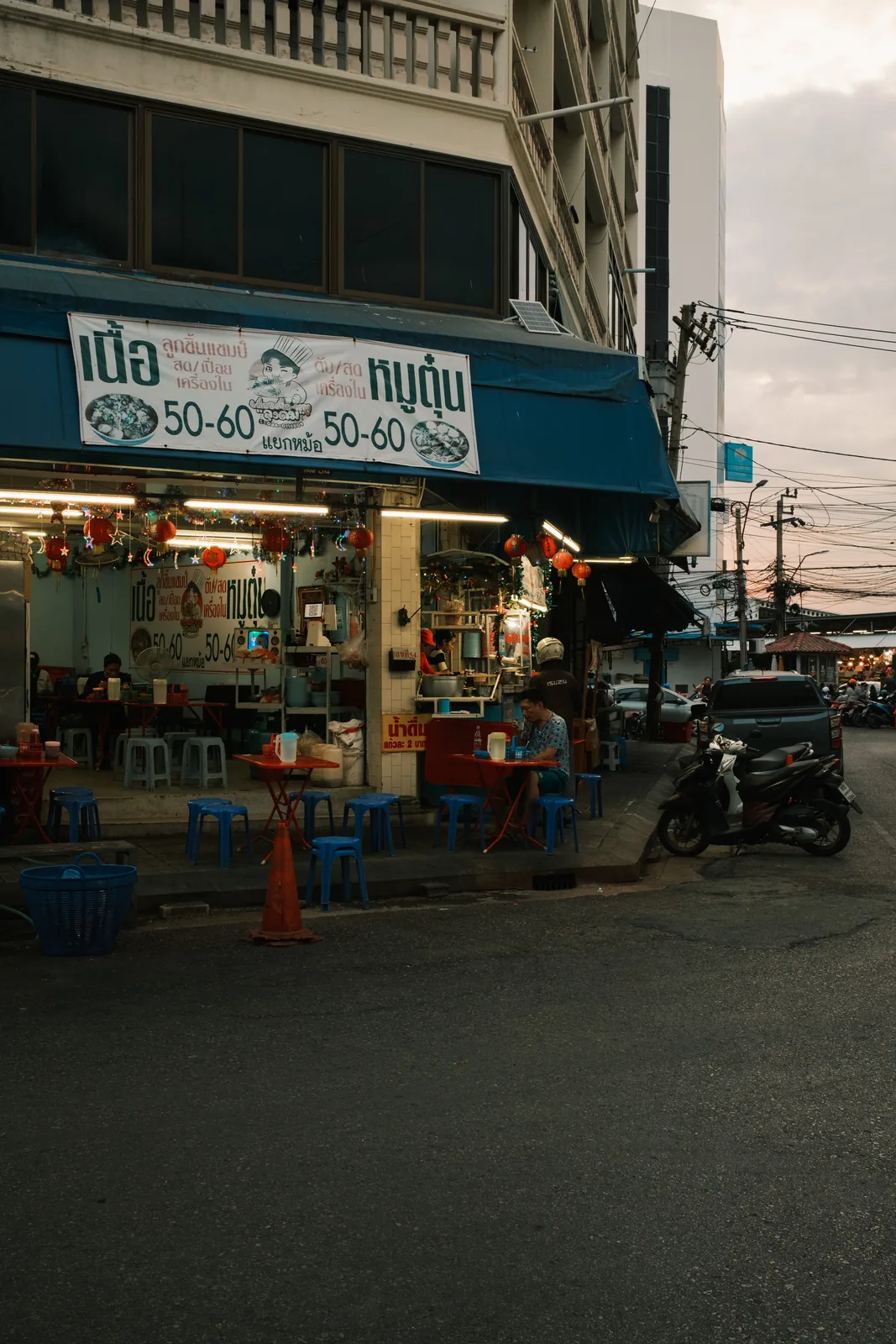
First step for every Thailand trip with a food allergy: build your Thai-language card before you board.
Build My Thailand Allergy CardUnderstanding Thai food allergens
Thailand's allergen challenge is structural, not incidental. Nam pla (fish sauce) is used in the same role as salt in Western cooking: as the foundational seasoning applied to virtually every savory dish before it leaves the kitchen. Kapi (shrimp paste) is the flavor base of most curry pastes and many dipping sauces. Peanuts appear across pad thai, satay, larb, and most Thai salads as garnish or base.
This means the allergy conversation at a Thai restaurant is not about whether a dish contains a specific ingredient as an optional addition. It is about whether the kitchen can fundamentally restructure how a dish is seasoned. Some can, with notice. Many cannot, particularly at street food level. A written Thai-language card communicating this in the kitchen's language is the tool that makes the difference.
Thailand risk at a glance
- Fish/shellfish allergy: Very high risk. Nam pla is in almost everything. Kapi in all curries.
- Peanut allergy: High risk. Garnish on multiple dishes. Cross-contamination at street food stalls.
- Tree nut allergy: Lower risk. Cashews appear in some stir-fry dishes. Coconut in curries.
- Gluten/wheat: Moderate. Soy sauce contains wheat. Some marinades and oyster sauce.
- Dairy: Low risk. Thai cooking rarely uses dairy. Coconut milk is the cream alternative.
Food safety guides
The complete breakdown of every dish category: which contain fish sauce, shrimp paste, peanuts, and derivatives. Read this before your first restaurant meal.
Peanut allergyWhere peanuts hide beyond the obvious dishes. What to order, what to avoid, how to communicate in Thai.
Street foodHow to participate in Thai street food culture with allergies. Communication scripts and dish-level risk breakdown.
Curated food tour options that accommodate dietary restrictions and allergen needs in Bangkok.
Spas, wellness retreats, and health-focused experiences in Thailand for allergy-aware travelers.
Hospitals, clinics, and emergency contacts for allergic reactions in Bangkok and across Thailand.
Your Thai-language allergy card
A Thai-language allergy card is the single most effective tool for Thailand. It specifies your allergens and derivative ingredients in Thai script, formatted for restaurant use. It communicates severity and specific derivatives that verbal requests miss entirely. The research is consistent on this: written cards in the local language change kitchen behavior more reliably than any other communication method.
Build yours free at AllergyPass in Thai and English. Print one copy for your wallet, save a digital version on your phone, and show it at every restaurant before you order.
Bangkok: the destination hub
Bangkok is where most Thailand allergy travelers spend the most time and where the most complete safety infrastructure exists. The Bangkok hub covers everything specific to the city.
Accommodation
Experiences
A food allergy does not mean sitting out Bangkok's food scene. Cooking classes put you in control of every ingredient before it goes into the wok, and food tour operators vary widely in how well they can accommodate a real allergy versus a general dislike.
Wellness
Thailand has one of the most developed wellness tourism industries in Asia, from street-level traditional Thai massage to multi-day detox retreats. Most of it carries no food allergy risk at all, but retreat programs with set menus are worth confirming in advance.
Emergency
1669: National EMS (ambulance)
191 : Police
1155: Tourist Police (English-speaking)
For a serious allergic reaction, go directly to a private hospital emergency department rather than a public one. Thailand's private hospital sector, especially in Bangkok, offers internationally accredited care with English-speaking staff and fast emergency processing.
Travel insurance
Check three things before you buy a policy for a Thailand trip: does it cover emergency anaphylaxis treatment, does it exclude food allergies as a pre-existing condition, and does it include medical evacuation with a clear coverage limit.
SafetyWing Nomad Insurance covers emergency medical care including anaphylaxis without a pre-existing condition exclusion for allergies, includes medical evacuation, and is available month-to-month, which suits both short trips and longer Southeast Asia itineraries.
Pre-trip checklist
- Build your Thai-language allergy card and save both a digital and printed copy
- Save the 1669, 191, and 1155 emergency numbers offline
- Confirm your travel insurance covers anaphylaxis treatment and medical evacuation
- Pack two epinephrine auto-injectors in your carry-on, if prescribed
- Read the hidden allergens guide before your first restaurant meal
Frequently asked questions
Is Thailand safe for food allergy travelers?
Thailand is one of the more challenging destinations in Asia for food allergy travelers because fish sauce, shrimp paste, and peanuts are foundational to virtually all Thai cooking rather than being optional additions. It is manageable with the right tools: a written Thai-language allergy card that specifies derivative ingredients, knowledge of which dishes carry higher and lower risk, accommodation in a neighborhood with hospital access, and travel insurance covering anaphylaxis treatment. Bangkok specifically has world-class international hospitals and a well-developed international restaurant scene that makes management more practical than in rural Thailand.
What are the most dangerous foods for allergy travelers in Thailand?
For fish and shellfish allergy travelers: nam pla (fish sauce) used as the primary seasoning in all savory Thai cooking, and kapi (shrimp paste) used in curry pastes and many dipping sauces. For peanut allergy travelers: pad thai (contains peanuts), satay sauce (peanut-based), larb (often contains peanuts), and many Thai salads. Cross-contamination from shared woks and cooking surfaces is an additional risk at street food stalls. Dishes with the lowest allergen risk tend to be plain steamed or grilled items prepared with visible ingredients.
What Thai food is safe for peanut allergy travelers?
Lower-risk dishes for peanut allergy travelers include khao man gai (poached chicken with rice, no peanut sauce), khao tom (rice soup), gai yang (grilled chicken, no sauce), steamed rice with plain stir-fried vegetables if specifically requested without peanuts and with separate utensils, and som tum (green papaya salad) ordered specifically without peanuts. Always communicate via a written Thai-language allergy card rather than verbally, and confirm at each restaurant rather than assuming. Even low-risk dishes can be cross-contaminated in a kitchen that uses peanuts heavily.