 AllergyPass
Vietnamese allergy card
The noodles, broth, dressing, and garnish may each need a question. Show your selected allergens in Vietnamese and English before the meal is prepared.

A live sample. Your finished card is personalized in the builder.
Get this card in Vietnamese
Your allergens, written in Vietnamese for kitchens in Vietnam, with the optional cross-contamination warning shown in this sample.
- Printable PDF with a cut-out card, plus an image for your phone
- Every allergen in Vietnamese and English, side by side
- Apple and Google Wallet passes for cards with up to three allergens
- One card lists every allergen you choose, so multiple allergies fit on a single card
$7.99 one-time for Vietnamese English is free · All Languages $29.99 · instant digital delivery, no shipping charge
Continue with this cardSecure checkout by LemonSqueezy · 14-day refund policy
One card for the north and the south
Vietnamese has different everyday words for peanut in the north and the south, and the same is true for sesame. A card that used only one form would still be understood in most kitchens, but it asks the cook to make a small translation of their own, which is exactly the step an allergy card exists to remove. The AllergyPass card prints both forms of each word, so a street vendor in Hanoi and a restaurant in Ho Chi Minh City each see the word they use. Everything else on the card is standard written Vietnamese.
Why a written card beats a spoken request in Vietnam
Vietnamese is a tonal language: the same syllable can mean different things depending on pitch, and the marks on written Vietnamese carry that difference. A request you try to say aloud is easy to mishear, especially at a busy street stall, while a written word is not. A card gives the person taking your order something concrete to read and pass to whoever is cooking. It is not a substitute for confirmation: show it before ordering, ask what is in the dish and how it is prepared, and do not order if staff cannot answer clearly. Our translation card guide explains how to use a card as part of that conversation.
What should you ask about in Vietnam?
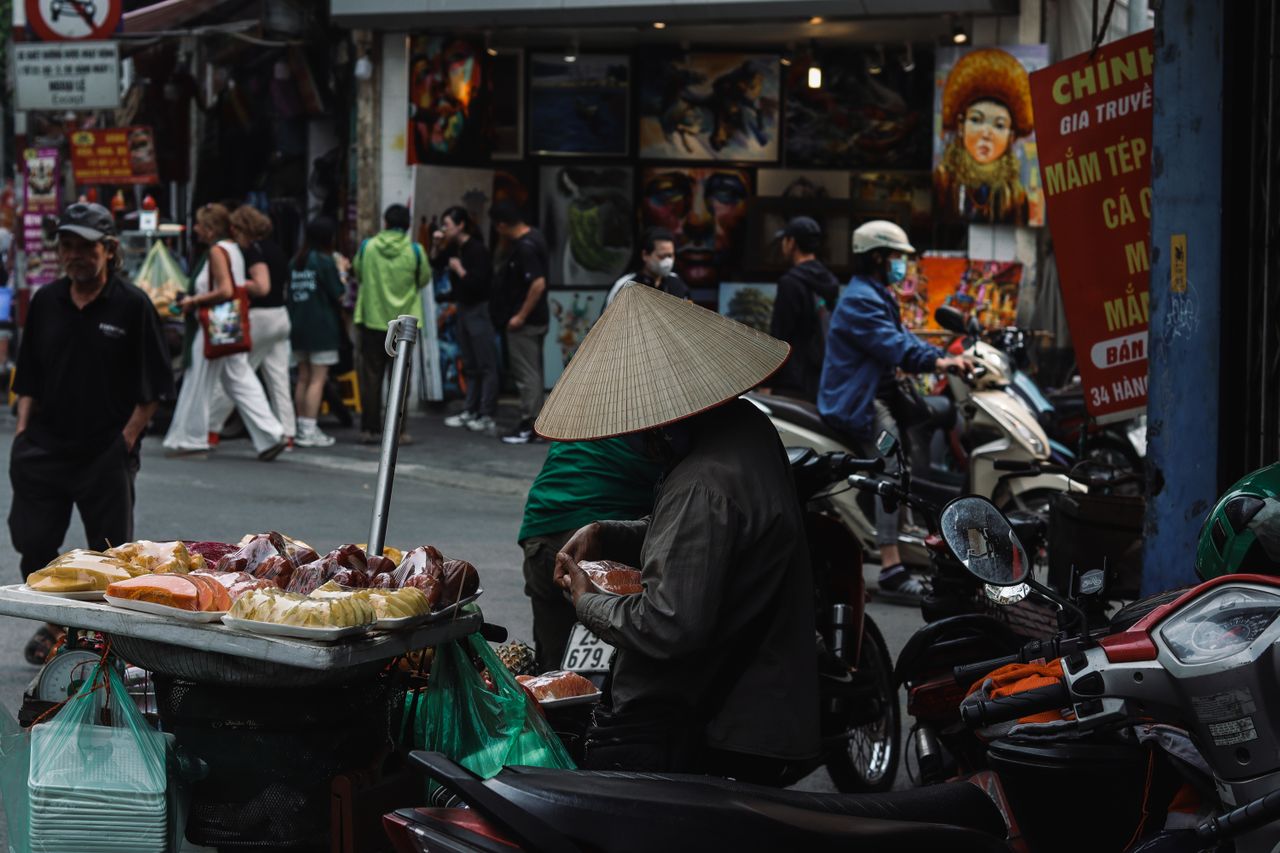
Fish sauce is the first question, since it is a staple of Vietnamese kitchens. It seasons broths, marinades and stir-fries and is the base of the dipping sauces served with many meals, so a dish with no visible fish can still contain it. Fermented shrimp paste and dried shrimp carry shellfish into condiments and cooking bases. Peanuts appear crushed over noodle dishes and in the dipping sauces served with summer rolls and crispy pancakes, and they can be blended so they are not visible at all. Soy sauce and hoisin can carry soy and wheat, and a rice dish is not automatically wheat-free: banh mi is a wheat baguette, and some fried dishes use wheat batter. At street stalls, shared dipping bowls, a single wok and a shared garnish spoon are common, so ask about the equipment as well as the recipe. Vietnam regulates the labels of goods through Decree 43/2017/ND-CP (amended by Decree 111/2021/ND-CP), which concerns labels on products; a dish cooked to order has no such label, so your card and your questions do that work. Our hidden allergens in Vietnamese food guide covers each of these in detail.
Frequently asked questions
Does the Vietnamese card work in both the north and the south?
Yes. Vietnamese uses different everyday words for peanut, and for sesame, in the north and the south, so the card prints both forms of each. A cook in Hanoi and a cook in Ho Chi Minh City will each see the word they use. The rest of the card is in standard written Vietnamese, which is read across the country.
Which allergens hide most often in Vietnamese food?
Fish, through fish sauce in broths, marinades and dipping sauces; shellfish, through fermented shrimp paste and dried shrimp; and peanuts, crushed over noodle dishes or blended into dipping sauces. None of them is reliably visible from a dish name. Soy sauce and hoisin can also carry soy and wheat. Select each allergen you react to so the card names it, then ask about sauces and shared utensils as well as the recipe.
What do you get with the Vietnamese allergy card?
A printable PDF with a cut-out card, plus an image sized for your phone, with every allergen you select written in Vietnamese and English. Cards with up to three allergens can also be added to Apple or Google Wallet. It is delivered by email straight after checkout.
This article is for informational and travel preparation purposes only and does not constitute medical advice. Always consult a qualified healthcare professional before traveling with a food allergy, and carry any prescribed emergency medication at all times. See our full medical disclaimer.