 AllergyPass
Spas and retreats in Thailand
with allergies
You have chosen a Thai spa, but the booking page says little about the oil, herbal compress, or lunch included in the package. Those details matter when you have an allergy. Start the conversation before you pay: what will touch your skin, what will you eat, and who can check the ingredients?
 Thailand
In this guide
Traditional Thai massage (nuad boran)
You arrive at a spa and the therapist sets out an oil bottle and a warm herbal compress. Before the treatment begins, ask what each product contains and whether either is part of the session you booked. A name on a treatment menu does not give you an ingredient list.
Traditional Thai massage often involves pressure and stretching while you remain clothed. Ask the venue to describe the actual setup, including lotions, balms, compresses, cleaning products, and linens. A dry treatment may involve fewer applied products, but that does not make it suitable for every allergy.
When to ask your clinician
A booking page cannot decide whether massage, heat, or stretching is appropriate for your health. If you have a medical condition, are pregnant, have an injury, or have recently had treatment or surgery, ask your clinician before booking. Tell the therapist about any restrictions your clinician gives you.
The US National Center for Complementary and Integrative Health explains massage safety and why some people need precautions. This guide helps with booking questions, not medical clearance.
What to communicate before your session
At a reputable spa, an intake form will prompt medical disclosure before your session. At a street massage shop, communicate this verbally before the therapist begins. Critical things to mention: current injuries or acute pain, pregnancy and stage, cardiovascular or blood pressure conditions, joint conditions, spinal conditions, and your preferred pressure level.
The phrase "mai ow nak" means "not too heavy" in Thai, the most useful phrase for communicating pressure preference when a therapist has limited English. "Ow nak" means "heavy/firm." Say "yoot" (stop) if you need the session to stop at any point.
What to ask the venue
Ask who will receive your allergy note, whether the therapist can see the same information, and whether you can inspect the products before the session. If a substitution is proposed, request its full ingredient information too. A higher price or a familiar booking platform does not answer these questions.
Comparing treatment formats
- Dry, clothed massage: Ask whether the session includes balm, lotion, a compress, or contact with previously used products.
- Oil massage: Request the exact product and ingredient list, including fragrances and any proposed replacement oil.
- Foot treatments: Check soaks, scrubs, creams, and gloves rather than asking only about massage oil.
- Herbal compresses: Ask about the herbs, added oils, wrapping material, and whether the compress is shared or reused.
Thai herbal treatments
A herbal compress, steam treatment, and body scrub can involve different ingredients even at the same spa. Ask for the current formulation of the treatment you are considering. The word “herbal” does not establish that it suits your allergy.
Luk pra kob: This treatment uses a heated herbal bundle. Ask which plants and other ingredients are in the bundle, what touches your skin, and whether the spa adds oils or balms. If the venue cannot identify the contents, choose another activity.
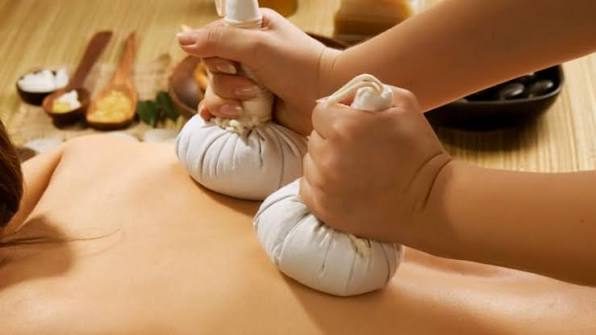
Herbal steam rooms: Ask what is added to the steam and whether products or scents are used elsewhere in the room. Discuss heat exposure and any relevant health concerns with your clinician.
Tok sen: Ask the venue to explain the session and every product used. Do not infer an absence of product contact from the treatment name.
Bangkok spas: choosing the right tier
Bangkok has street massage shops, standalone spas, and hotel spas. Each tier offers a different booking process, treatment menu, privacy level, and way to ask about products; compare the venue against your own needs.
Street massage shops
A walk-in shop may offer a short menu and little time for questions. Before agreeing to a session, ask which products will be used and how the therapist will receive your allergy note. If the ingredients cannot be identified, choose a different activity.
Facilities, language support, and products vary. Ask about the exact shop rather than assuming that its price tells you what it can accommodate.
Mid-range standalone spas
Standalone spas may offer private rooms, more treatment choices, and a booking channel for questions. Ask what will touch your skin, whether the current ingredient list is available, and whether the venue can decline a treatment it cannot verify.
Do not assume a carrier-oil substitution is suitable. Send the exact allergen before booking and request written confirmation from the venue.
Premium hotel spas
Hotel spas may have a direct reservation team and documented treatment menus, but the actual products and procedures vary. Contact the spa before booking, request the current ingredient information, and do not treat a hotel category as proof that a substitution is medically suitable.
Communicating product or skin allergies at Bangkok spas
Product allergies relevant to spa visits differ from food allergies. Questions may include the exact carrier oil, fragrances, latex-containing materials, and botanicals in scrubs or compresses. Name the ingredients you personally avoid. Food allergy, contact allergy, and fragrance sensitivity are different concerns; ask your clinician how they apply to you.
Communicate by email or booking note before the appointment rather than verbally at arrival. Written communication gives the spa time to check their product list, prepare a substitution, and confirm with you before you arrive. A verbal note at the reception desk at a busy mid-range spa may not reliably reach the therapist.
Can massage oils actually trigger a food allergy reaction?
Do not use a treatment menu to decide whether an oil is medically safe for your allergy. Processing, labeling, formulation, and the product used by the spa vary. Ask for the current product name and ingredient information, and discuss the risk with your clinician if you have a serious food or skin allergy.
Terms such as “cold-pressed,” “organic,” or “refined” are not enough to establish that a product suits you. If the spa cannot identify the product or cannot provide an alternative you have verified, choose a treatment without that product.
Food allergy and contact dermatitis are different concerns, and a spa treatment can involve both food-derived oils and fragrances or botanicals. Tell the therapist about any known skin or scent reactions as well as food allergies; seek medical advice for your own risk rather than relying on a general product category.
None of this changes the practical advice above: name your specific allergen before the appointment, ask what product will be used, and do not assume that processing or a substitute removes your risk.
How to book Bangkok spas
GoWabi is one booking option. Check the listing and then contact the venue directly about your allergy; a platform listing does not confirm the current product or the kitchen's ability to accommodate you.
For a hotel spa, ask to speak with the spa team before booking. Check that your written allergy note reaches the therapist and that the team can identify the products. Whether you book directly or through a platform, keep the venue’s answer with your reservation.
Book a Bangkok spa on GoWabi and note your allergen in the booking message before you arrive.
Browse Bangkok spas on GoWabi →Multi-day wellness retreats in Thailand
You may be comparing a retreat on Koh Samui with a stay near Chiang Mai or Pai. Start with the actual programme and the included meals. A location, a wellness label, or a carefully planned menu does not establish that the kitchen can accommodate your allergy.
Koh Samui
Koh Samui has a range of detox and cleansing programs, from short stays to longer programs with structured meals and treatments. Program length, food rules, supplements, and medical screening vary; review the current details directly with the retreat.
For food allergy travelers, a structured meal plan is a reason to ask for the whole menu before booking. A detox label says nothing about allergen controls. Ask who checks ingredients, who prepares each meal, and how substitutions and shared equipment are handled.
Chiang Mai
Chiang Mai has yoga, meditation, and traditional-healing programs, including multi-day stays in and around the city. Review the current schedule, accommodation, meal plan, and kitchen communication process before booking.
Pai
Pai has smaller yoga and wellness programs in a mountain setting. The venue, kitchen, transport, and medical access may be more limited than in a large city, so confirm the meal plan and emergency route before committing to a multi-day stay.

Food allergies at wellness retreats
Multi-day retreat programs often include structured meals, so food communication matters throughout the stay rather than only at booking. Ask who plans the menu, who cooks, and how snacks, drinks, supplements, and shared preparation are handled.
Do not assume a retreat can accommodate a food allergy because it has a wellness or detox focus. Communicate in writing before booking, name derivatives, and ask for confirmation that every included meal, snack, drink, and supplement can be checked. If the kitchen cannot answer, choose a different program.
Frequently asked questions
What wellness experiences is Thailand known for?
Traditional Thai massage (nuad boran), hot herbal compress (luk pra kob), herbal steam rooms, detox retreat programs, yoga and meditation retreats, and hotel spa programs are all available in Thailand. The treatment, products, booking process, and included meals vary by venue.
How much do wellness experiences cost in Thailand?
Prices vary by venue, treatment, season, and what is included. Check the current menu, booking terms, taxes, and retreat inclusions before paying; older price ranges are not reliable comparison data.
Do I need to book in advance?
Booking rules vary. Ask the venue about availability, cancellation terms, treatment length, product information, and how an allergy note reaches the therapist or kitchen. Retreats may have fixed intake dates and advance forms.
What is the difference between street massage and a Bangkok spa?
Street massage shops often offer basic dry massage, while standalone and hotel spas may offer private rooms and more ways to ask questions. These are tendencies, not guarantees. For product allergies, ask any venue what will touch your skin and whether it can show the current ingredient list before the appointment.
Can you get a Thai massage with a product or skin allergy?
A dry, clothed treatment may reduce product variables, but it is not a medical guarantee. Tell the venue and your clinician about your allergy, ask what will touch your skin, and request current product information before booking an oil, herbal, scrub, or wrap treatment.
How do I book a spa in Bangkok?
Use the spa's current booking channel or a reputable platform, then send your allergy question before confirming. For hotel spas, booking directly may make it easier to reach the spa team. Ask for written confirmation of the treatment, products, and any food arrangements.
Is Thai massage safe with a latex allergy?
Tell the venue about a latex allergy before booking and ask which treatments use gloves, elastic, adhesives, or other latex-containing materials. Ask the venue to confirm the alternative materials; do not infer them from the treatment name or venue tier.
Do I need to book wellness experiences in Thailand in advance?
Booking rules vary. Ask the venue about availability, treatment duration, cancellation terms, product ingredients, and how an allergy note reaches the therapist or kitchen. Retreats may have fixed intake dates and advance forms.
Can you get a Thai massage if you have a product or skin allergy?
A dry, clothed treatment may reduce product variables, but it is not a medical guarantee. Tell the venue and your clinician about your allergy, ask what will touch your skin, and request current product information before booking. Do not assume a substitute is suitable without checking it.
This article is for informational and travel preparation purposes only and does not constitute medical advice. Always consult a qualified healthcare professional before traveling with a food allergy, and carry any prescribed emergency medication at all times. See our full medical disclaimer.