 AllergyPass
Emergency Healthcare
in Vietnam
What to do, how to prepare, and what to verify if you need medical care in Vietnam. Written from a travel-planning and healthcare-research perspective.
 Vietnam
115: Ambulance / Medical Emergency
Emergency numbers and service availability can change. Check current official Vietnam travel guidance before departure, and save the number locally.
In this guide
Choosing where to seek care
An international-facing private hospital may be useful when you need help communicating in English or sorting out insurance questions, but that does not make it the universal first choice. In a serious emergency, use your action plan, call local emergency services, and choose care based on the exact location, current route, severity, and the facility's present emergency capability.
Public hospitals and private hospitals differ by location, service, staffing, and payment process. Do not delay urgent care because you are trying to reach a named facility or determine whether a hospital will bill your insurer directly. Carry your medication, action plan, passport or identification, insurance details, and a translated allergy card if you use one.
Hospital starting points by city
These are planning starting points, not a ranking or a guarantee of current service. Contact details, emergency access, language support, and insurance arrangements can change, so confirm them directly and save a nearby alternative for your exact itinerary.
Hanoi
Dong Da District. A named planning option for Hanoi; verify current emergency access, language support, and the route from your accommodation before relying on it.
Emergency: +84 24 3577 1100
Ho Chi Minh City
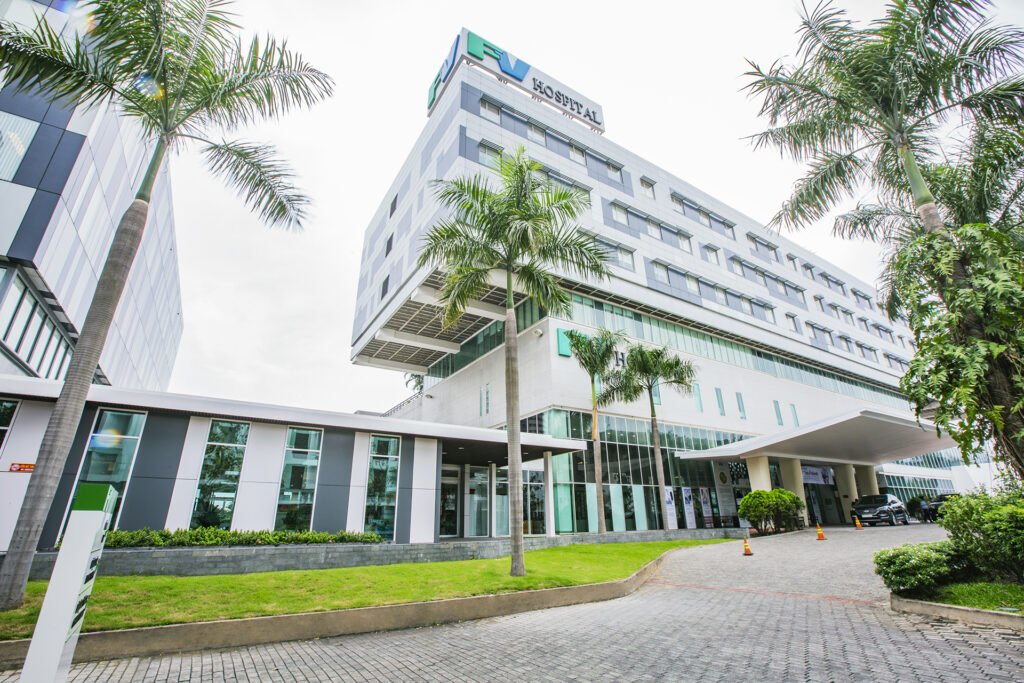
District 7. A named planning option for Ho Chi Minh City; verify current emergency access, language support, payment arrangements, and the route from your accommodation before relying on it.
Emergency: +84 28 5411 3333
Da Nang and Hoi An
30/4 Street, Hai Chau District, Da Nang. A named planning option for Da Nang and a possible option for travelers staying farther afield; verify current emergency access, language support, payment arrangements, and the route from your accommodation.
Emergency: +84 236 3711 111
Travel insurance and direct billing
A hospital may have an insurance desk, but direct billing is never something to assume. Before travel, ask your insurer what its emergency process requires and whether it needs pre-authorization. At the hospital, show your policy details and ask for an itemized record, but do not delay emergency treatment while waiting for a billing answer.
If direct billing is unavailable, or if you are treated at a smaller facility, keep receipts, clinical notes, prescriptions, and payment records for your claim. Costs vary by facility, treatment, complications, and evacuation needs, so a travel policy's limits and exclusions matter more than a country-wide price comparison.
Before buying a policy for a Vietnam trip, check three things: does it cover emergency anaphylaxis treatment, does it exclude food allergies as a pre-existing condition, and does it include medical evacuation if the treating team says a transfer is needed? Read the policy's limits, exclusions, notification rules, and assistance number. SafetyWing Nomad Insurance is one policy to compare, but its documentation does not name food allergies or anaphylaxis. Review the pre-existing-condition and evacuation terms and get written clarification before buying.
For allergic reactions specifically
If you carry an EpiPen or other adrenaline auto-injector, keep it accessible and follow the storage and use instructions given by your prescriber. For suspected anaphylaxis or difficulty breathing, follow your emergency action plan, use prescribed epinephrine promptly, and call 115. Do not wait for a particular hospital, a pharmacy, or an antihistamine to become available.
Tell emergency staff what happened, what you suspect you were exposed to, what medication you used, and when you used it. A photo of the dish may help, but treatment comes first. If you carry an AllergyPass card, show it as a communication aid alongside your action plan and medication information.
Add your emergency contact details to your allergy card
Build My CardFrequently asked questions
What should I do if I have an allergic reaction in Vietnam?
Follow your prescribed emergency action plan. For suspected anaphylaxis, use your prescribed epinephrine promptly, call 115 for an ambulance, and get emergency medical care. Do not wait for an antihistamine to work or assume that a particular private hospital is the only option; use the nearest appropriate emergency service and show staff your medication and allergy information.
Can I buy antihistamines in Vietnam?
Pharmacy stock, product names, and advice vary, so do not make local pharmacy access your emergency plan. An antihistamine may be part of an individual clinician-approved plan for mild symptoms, but it is not a substitute for epinephrine in anaphylaxis. Carry enough prescribed medication for the trip and ask your clinician what to do if symptoms change.
How should I choose a hospital in Vietnam?
Choose based on the exact location, the current route, the severity of the emergency, and the facility's present emergency capability—not a static ranking. International-facing hospitals may make communication or insurance questions easier, but staff, services, payment arrangements, and phone numbers can change. Save a nearby emergency department before each leg of your trip and confirm details directly.